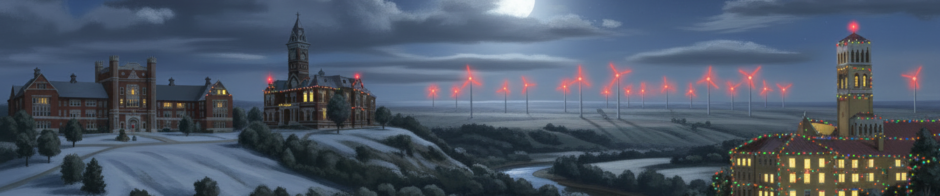
The history of the DRiV / Tenneco facility in Maryville, Missouri (located at 2000 E. First St.) spans several decades of corporate restructuring, tracking closely with the evolution of the American automotive aftermarket supply chain. [1, 2]
Corporate Evolution and Plant Heritage
The plant’s history is defined by a succession of high-profile automotive parts manufacturing names: [1]
- Early Roots: The facility originally operated under various historical names, including Maryville Forge, LMP Steel & Wire Co., and Moog Automotive Inc.. Moog became legendary in the automotive industry for producing high-quality chassis, steering, and suspension parts. [1, 2, 3]
- The Federal-Mogul Era: Through industry consolidation, the plant transitioned into Federal-Mogul Chassis Products. During this era, the Maryville site solidified its role as a regional manufacturing hub, heavily focused on heavy-duty components, chassis parts, and suspension systems. Along with Kawasaki, it grew into one of Nodaway County’s cornerstone industrial employers. [1, 2, 3]
- The Tenneco Acquisition (2018): On October 1, 2018, the global manufacturing giant Tenneco Inc. completed a $5.4 billion acquisition of Federal-Mogul. This massive buyout brought the Maryville site under Tenneco’s corporate umbrella. [1, 2, 3]
- The Launch of DRiV (2019–2020): Following the acquisition, Tenneco structured its massive portfolio of aftermarket and ride-performance brands into a dedicated division known as DRiV Motorparts. [1, 2, 3]
Current Operations & Impact
Today, the facility operates explicitly under the DRiV banner (retained after Apollo Global Management took Tenneco private in 2022). [1, 2]
- What it Produces: The Maryville plant is integral to producing and supplying replacement vehicle parts—primarily focusing on steering, braking, suspension, and engine components for globally recognized brands like MOOG, Wagner, and Monroe. [1, 2, 3, 4]
- Local Significance: The site remains a critical hub for high-volume manufacturing, logistics, and scheduling operations in Northwest Missouri. It coordinates extensive production lines using localized continuous improvement strategies (such as Lean manufacturing) to service the global automotive aftermarket. [1, 2, 3]
Chassis, steering, and suspension parts Made at Maryville
The DRiV manufacturing facility in Maryville, Missouri (formerly known as Maryville Forge) is dedicated exclusively to producing chassis, steering, and suspension parts. [1, 2]
According to executive plant insights from DRiV, the facility manufactures parts for both original equipment (OE/OES) automotive customers and the aftermarket. The primary products and brands manufactured at the Maryville plant include: [1]
- MOOG Parts Line: The plant handles a vast amount of aftermarket production for MOOG Steering & Suspension. This includes critical front-end components such as tie rod ends, ball joints, control arms, and idler arms. [1, 2, 3]
- OE/OES Chassis Components: The facility produces custom-engineered chassis parts supplied directly to major vehicle manufacturers as original equipment.
Corporate Parent History
Moog Automotive
The MOOG automotive brand gets its name directly from its founders, brothers Hubert Prater (H.P.) Moog and Shulman Alva Moog. The company originated in 1917 when a new Prohibition law closed their father’s wholesale whiskey business in Florida, forcing the brothers to look for a new venture. In 1919, they moved to St. Louis, Missouri, and purchased the local branch of the Jenkins-Vulcan Spring Company, which manufactured and distributed automotive leaf springs primarily for the Ford Model
Key Events & Company Timeline
- 1920s (Advanced Heat Treating): The company—then operating as the St. Louis Spring Company—installed an advanced, electrically fired draw furnace. This delivered more consistently tempered springs and established the brand’s reputation for forward-looking engineering. [1]
- 1930s (The “Problem Solver” Era): With the introduction of General Motors’ new “knee-action” independent front suspension, the Moog brothers shifted their manufacturing focus to front-end replacement parts. They officially branded these high-quality, redesigned replacement components as “MOOG”, giving birth to their famous industry reputation as the automotive “Problem Solver”. [1, 2]
- 1950s (The Gusher Bearing): MOOG introduced the “gusher” bearing, a major innovation that drastically reduced friction in steering ball joints without sacrificing component strength. During this time, legendary racer Glenn “Fireball” Roberts became the first driver to place a MOOG decal on his race car. [1, 2]
- 1966 (NASCAR Dominance): MOOG formalized its heavy involvement in motorsports. This kicked off an unprecedented 50+ year streak of powering every single NASCAR Cup Series championship-winning vehicle. [1, 2]
- 1998 (Corporate Acquisitions): After expanding its manufacturing footprint globally (including opening facilities like the Maryville Forge plant in 1984), the Moog Automotive division was acquired by the Federal-Mogul Corporation.
Federal-Mogul Corporation
The Federal-Mogul Corporation was a premier American developer and manufacturer of automotive, industrial, and aerospace components. Before it was acquired by Tenneco Inc. in 2018 for $5.4 billion, it grew from a local Detroit mill supplier into a global manufacturing juggernaut. [1, 2, 3, 4]
Origin of the Name
The name Federal-Mogul is a portmanteau born from a pivotal 1924 corporate merger between two distinct manufacturing entities: [1, 2]
- “Mogul” comes from the Mogul Metal Company, a subsidiary formed by the original founders to sell a proprietary, highly successful Babbitt metal alloy (a blend of tin, antimony, and copper) that they trademarked under the name “Mogul”. [1, 2]
- “Federal” comes from the Federal Bearing and Bushing Company, an engine components manufacturer founded in 1915 by a group of Detroit businessmen. [1]
When the two companies merged in 1924, they combined their identities to form the Federal-Mogul Corporation. [1, 2]
Corporate History & Milestones
- 1899 (Founding): The company was originally started in Detroit, Michigan, by J. Howard Muzzy and Edward F. Lyon as the Muzzy-Lyon Company. Initially, they sold industrial mill supplies and rubber goods.
- The Die-Cast Breakthrough: Muzzy and Lyon invented a new process for custom die-casting bearings using their proprietary Mogul alloy. This was highly innovative for the era, securing major early automotive clients like Buick.
- 1924 (The Merger): Seeking greater scale, the Muzzy-Lyon/Mogul Metal business officially merged with Federal Bearing and Bushing to form Federal-Mogul.
- Mid-Century Expansion: The company debuted on the Fortune 500 in 1956 following a string of high-profile acquisitions, including the National Motor Bearing Company and Bower Roller Bearing Co.. In 1966, it relocated its headquarters from downtown Detroit to Southfield, Michigan.
- The Aftermarket Consolidation (1990s): Seeking insulation from volatile OEM production cycles, Federal-Mogul aggressively bought out premium aftermarket suppliers. Its biggest deals included acquiring Fel-Pro (gaskets) and the Automotive Products division of Cooper Industries in 1998, which added MOOG, Champion, and Wagner to its portfolio.
- Asbestos Liabilities & Bankruptcy (2001): Through its late-90s acquisition of British industrial firm T&N PLC, Federal-Mogul inherited massive, catastrophic legal liabilities related to asbestos. This forced the company into Chapter 11 bankruptcy restructuring in 2001.
- Restructuring & Tenneco Sale (2007–2018): Emerging from restructuring, billionaire investor Carl Icahn acquired a majority stake and eventually took the company private in 2017. In October 2018, Tenneco officially finalized its acquisition of Federal-Mogul.
The corporate history of Tenneco is a rare example of a business that successfully transitioned from a 1940s regional energy pipeline operator into a massive global automotive conglomerate. [1, 2]
Tenneco
Origin of the Name
The name Tenneco is derived directly from the Tennessee Gas & Transmission Company. When the corporation heavily diversified out of the utilities sector in 1966, it adopted its longtime southern gasoline branding—Tenneco Inc.—as its official global corporate identity. [1]
Corporate History & Evolutionary Phases
The Energy & Conglomerate Era (1940–1980s)
- 1940–1943 (The Pipeline Roots): The company originated as the Tennessee division of the Chicago Corporation. Under founder Henry Gardiner Symonds, it constructed a massive 1,200-mile natural gas pipeline from Texas to West Virginia to fuel industrial factories during World War II. [1, 2]
- Post-War Expansion: To minimize rigid federal utility price caps, Symonds aggressively expanded into oil production, gasoline distribution, chemicals, packaging, and heavy machinery (absorbing J.I. Case tractors). By the 1970s, Tenneco was one of the largest multi-industry conglomerates in the world. [1, 2, 3]
- Entering the Auto Industry: During its diversification boom, Tenneco purchased two foundational automotive aftermarket brands: Walker Manufacturing (exhausts) in the late 1960s and Monroe Auto Equipment (shocks and struts) in 1977. [1, 2]
The Great Unbundling & Automotive Pivot (1988–1999)
- Divesting the Oil Patch: Facing severe deregulation headwinds, Tenneco spent the late 1980s selling off its original oil fields and gas transmission networks to focus entirely on industrial manufacturing. [1, 2]
- The 1999 Split: Tenneco shed all non-automotive segments, spinning off its packaging division (Pactiv Corp.). The remaining core corporate entity was renamed Tenneco Automotive Inc., functioning as a pure-play global supplier focused on ride control and clean air/emissions platforms. [1, 2]
Global Scale, Federal-Mogul, and Apollo Takeover (2000s–Present)
- 2005 Rebrand: The company dropped “Automotive” to return simply to Tenneco, expanding its reach as a major tier-1 original equipment manufacturer (OEM) for automakers worldwide.
- The Federal-Mogul Mega-Deal (2018): Tenneco purchased the legacy Federal-Mogul Corporation for $5.4 billion. This doubled the company’s footprint overnight and brought iconic brands like MOOG suspension, Champion spark plugs, and Fel-Pro gaskets into the fold.
- The Launch of DRiV: In 2019, Tenneco grouped these newly acquired aftermarket legends alongside Monroe to form its custom chassis and performance division, DRiV Incorporated.
- Going Private (2022): In November 2022, private equity powerhouse Apollo Global Management finalized a $7.1 billion acquisition of Tenneco, delisting it from the New York Stock Exchange and transitioning it into a privately held automotive entity.
DRiV Incorporated is an global automotive components supplier that serves as the Aftermarket and Ride Performance division of Tenneco. [1, 2, 3]
History
DRiV was structured in October 2018 following Tenneco’s acquisition of the Federal-Mogul Corporation. Intended to combine Tenneco’s ride performance business with Federal-Mogul’s massive “Motorparts” portfolio, the division was formally named DRiV Incorporated in February 2019. [1, 2, 3]
DRiV
Initially, Tenneco planned to spin DRiV off into an entirely independent, publicly traded company. While changing market dynamics and the eventual 2022 acquisition of Tenneco by Apollo Global Management adjusted those public listing plans, DRiV continues to operate as an unified business group managing dozens of the automotive industry’s most historic brands. Its roots trace back to the late 1800s via legacy acquisitions. [1, 2, 3]
Origin of Name
The name DRiV (pronounced drive) is a stylized nod to automotive movement, but it was specifically chosen to echo one of the company’s premium, fastest-growing technological product lines. The name directly references the “DRiV” trade name used for the Monroe line of intelligent, road-smoothing electronic suspension systems. [1]
Product Categories & Brands
DRiV operates through two main business segments: Motorparts (supplying the global multi-brand replacement aftermarket) and Ride Performance (supplying Original Equipment Manufacturers/OEMs). [1, 2, 3]
Its portfolio includes over 30 iconic brands: [1]
- Shocks, Struts, & Suspension (Ride Performance): Leads original equipment and aftermarket segments through brands like Monroe, Öhlins (advanced racing and performance suspension), and Rancho.
- Steering & Chassis: Managed primarily under MOOG (steering, control arms, and ball joints) and QuickSteer.
- Braking Systems: High-end friction and braking solutions supplied by Wagner, Ferodo, and Jurid.
- Sealing & Engine: Engine gaskets, seals, and internal components via Fel-Pro, Sealed Power, National, and Goetze.
- Emissions & Exhaust: Clean-air, mufflers, and catalytic converters built under the Walker, Thrush, and DynoMax names.
- Ignition & Maintenance: Spark plugs, wiper blades, and lighting options provided by Champion.
Jokes
- The Resume Problem: Working there must be confusing for the HR department. “So, you worked at Maryville Forge, LMP, Moog, Federal Mogul, and Tenneco DRiV? That’s an impressive career, or you just never left the breakroom for twenty years.”
- The Sign Painter’s Retirement Fund: The local sign company must have a dedicated “Maryville Plant” department. They probably don’t even invoice anymore; they just keep a fresh “New Name” sign pre-printed in the lobby, waiting for the next merger.
- The Lost Delivery Driver: Being a delivery driver in Maryville must be a nightmare.
- Driver: “I’m looking for the Federal Mogul plant.”
- Local: “Oh, you mean the old Moog place? That’s Tenneco now.”
- Driver: “Right, but the GPS says LMP Steel.”
- Local: “Just look for the building that looks like it’s having an existential crisis. You can’t miss it.”
- The “Rebranding” Game: At this point, the factory isn’t just making automotive parts; it’s basically playing a corporate version of musical chairs. Every time the music stops, they have to paint a new logo on the wall before the ink on the last one even dries.